Harnessing Spring Energy

Spring!

Working with patients in my chiropractic practice I have noticed several seasonal trends with injuries, and patient behaviours. Notably in spring people come out of hibernation and are energized to be more active in their lives. In my practice that results in new ailments related to spring activities including strain from gardening, golf, gardening, and baseball etc. 

If we can harness this fresh wave of spring energy, it can be a real boost to our creativity and productivity from a coaching perspective. 

If you are feeling more inspired this time of year I encourage you to channel that energy towards your goals – we have to use it when we can!

In the last few days I’ve been inspired to begin creating a program specifically designed to address Work/Life Balance. Sharing it here with you will keep me accountable (!) and I’ve definitely felt more oomph in my step compared to the darker days of winter.

[originally published March 2021]

Signs of Burnout

While designing my upcoming Work/Life Balance course, I have been interviewing friends and colleagues about their approaches to Rest/Recovery/Self-Care/Vacation.

I’m learning more and more that avoiding burnout is not dissimilar to avoiding having a full blown low back spasm: your body will give you signs and symptoms along the way before having a full crash. 

The key is to recognize your own signs before it becomes an emergency.

These signs are different for everyone: for me it results in adrenal fatigue if I’m too stressed over a long period of time. I get very tired and am not motivated to move. I also risk getting bitter and resentful if I’m not mindful of my recovery needs. 

For others it could be changes to their outlook, i.e. becoming more and more pessimistic, or having trouble regulating their emotions. Or it can manifest as headaches, skin disorders or depression.

What are the small signs your body gives you that you are in need of more rest/recovery/self-care/vacation? 

Have you experienced burnout before?
Do you know what your mind and body needs to avoid experiencing it again?

[originally published April 2021]

Managing Post-Lockdown Re-Entry Stress

End of school, beginning of summer holidays, Covid restrictions lifting in different cities…how is everyone handling all this change?

I thought I was fine until I found myself wide awake at 2:30am on the eve of my son’s first baseball game, and realized that I was feeling overwhelmed by all the changes.

So for three hours in the middle of the night I contemplated the following:

  • jumping back into life as parent of a kid in competitive sports (attending games, driving to games)
  • committing to social engagements
  • transitioning from being at home 24/7 

These are the solutions I came up with:

  • accept that although restrictions were opening up, I could be intentional and careful about how many social gatherings to commit to
  • accept that I only have a few more weeks before I depart to hike the West Coast Trail and that my training needs to take priority 
  • accept that the transition to being a sports parent may feel harried at first but that we will get back into a groove after a few outings
  • limit the number of coaching clients I could see in July and start booking into August

Once I came up with this list I felt better and eventually got back to sleep! Other patients and clients have been describing similar re-entry stress so this is likely a familiar feeling as we try to navigate the new ‘normal’. 

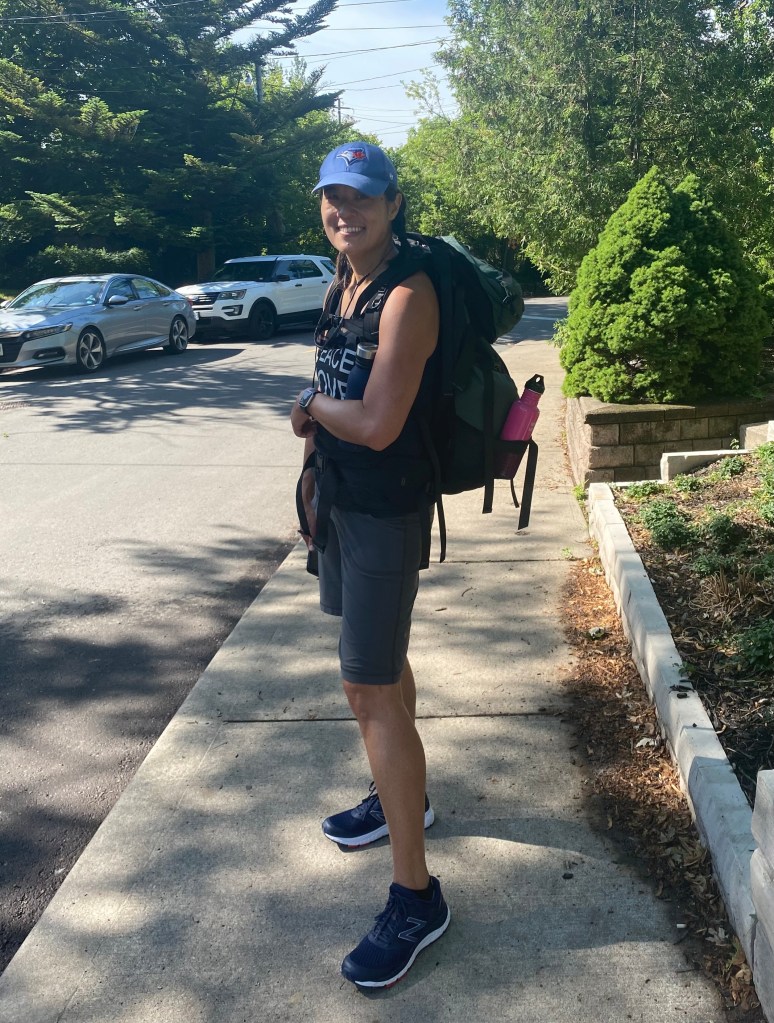
On a side note, the training for my hike is going well – in the picture above I’m carrying a large MEC pack that I’ve had for 18 years (still in good shape!). I’m up to carrying 30 lbs for 4 hours during my weekly training walks. 

[originally published July 2021]

New Philosophy for Active Aging

Well… I survived the West Coast Trail! 

In the photo above my friend Caroline and I are happy to have survived the challenging boulder section on Day 2. 

75 km over 7 days – here are some more fun stats:
– I started with a 40 lbs pack including water, personal belongings and my portion of the group gear (one food bag containing 1-2 meals, fuel bottle and half a tent)no book, no cell phone 1 journal
– I expected to be blown away by the spectacular scenery (see below for two of my favourite photos from the trip) and happy to have challenged myself physically but I didn’t expect to gain a whole philosophy for aging, which came about after meeting countless people in their 50s, 60s and even 70s hike the trail!


One thing that stuck with me was learning how two independent groups of older women were approaching the trail: they each were taking 8 days, 7 nights to complete the hike whereas our group was hiking it in 7 days, 6 nights.

I think 8 days/7 nights is a wonderful metaphor for keeping active as you get older: tack on an extra day, take a bit more time, stop and smell the roses and continue to experience all the amazing things you love to do. 


[originally published August 2021]