Signs of Burnout

While designing my upcoming Work/Life Balance course, I have been interviewing friends and colleagues about their approaches to Rest/Recovery/Self-Care/Vacation.

I’m learning more and more that avoiding burnout is not dissimilar to avoiding having a full blown low back spasm: your body will give you signs and symptoms along the way before having a full crash. 

The key is to recognize your own signs before it becomes an emergency.

These signs are different for everyone: for me it results in adrenal fatigue if I’m too stressed over a long period of time. I get very tired and am not motivated to move. I also risk getting bitter and resentful if I’m not mindful of my recovery needs. 

For others it could be changes to their outlook, i.e. becoming more and more pessimistic, or having trouble regulating their emotions. Or it can manifest as headaches, skin disorders or depression.

What are the small signs your body gives you that you are in need of more rest/recovery/self-care/vacation? 

Have you experienced burnout before?
Do you know what your mind and body needs to avoid experiencing it again?

[originally published April 2021]
My Kid’s Broken Teeth + A Taoist Parable

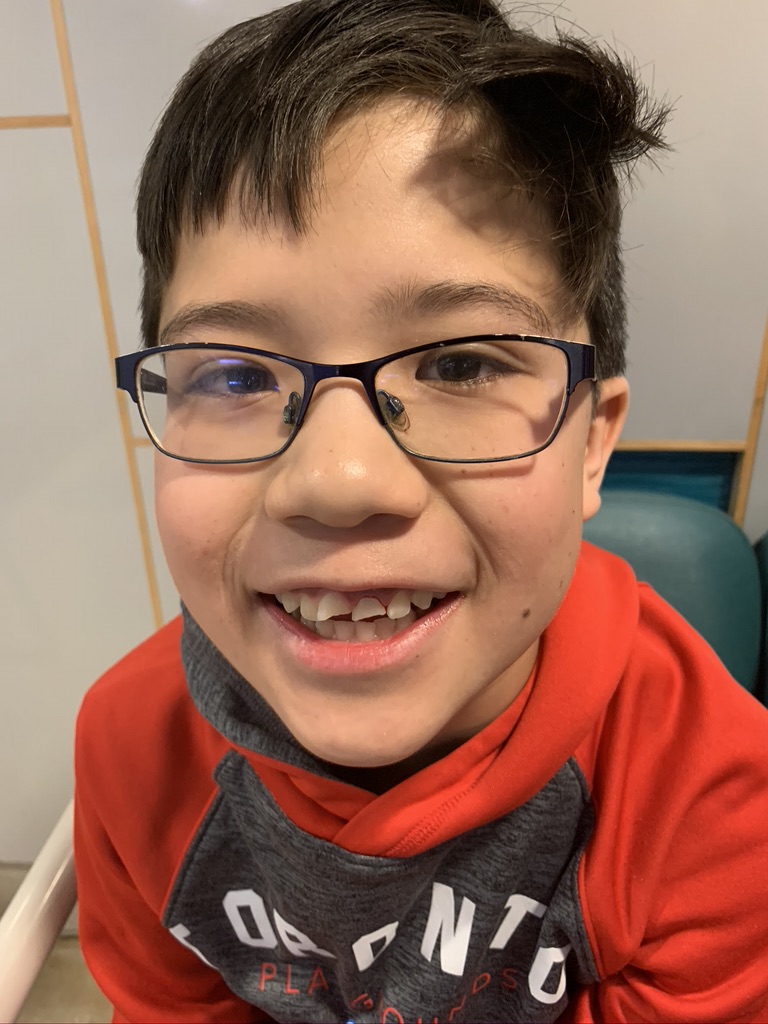
Early in February my son fell walking up some basement stairs at a friend’s place; he banged his head, knee and cut his finger. When he was waiting for a band-aid, he felt dizzy and passed out, falling forward and breaking his two front teeth on the kitchen floor. After six hours at Sick Kids Hospital it was determined that he did not have a concussion, his knee was just bruised, emergency first-aid dental procedures would be enough to seal his broken teeth (until we could see our regular dentist) and 4 stitches were needed for the finger cut. After 3 weeks the internal tooth fracture healed well enough that our dentist could build his teeth back up.

You can imagine it was hard for me to not freak out and panic. Fortunately while this was all happening, I was reading a book about Traditional Chinese Medicine approaches to healing the different stages of women’s cycles, Reflections Of The Moon On Water by Xiaolan Zhao. Reading the following parable has helped me put my son’s traumatic accident and consequences in perspective:

“There is a Taoist parable that expresses the relative nature of opposites. One day a farmer was telling his neighbour about his horse that ran away. The neighbour sympathized with the farmer, say, “That’s too bad”. The farmer replied, “You never know what is good or bad”. The next morning the horse returned. But it was not alone. It brought with it many wild horses. The neighbour said to the farmer, “Congratulations, it’s good that your house has returned and brought many other horses”. Again the farmer said, “You never know what is good or bad”. The next morning the farmer’s son went to mount one of the wild horses. The horse threw the young man, who fell off and broke his leg. Once again the neighbour sympathized with the farmer. For the third time, the farmer said, “You never know what is good or bad”. The next day soldiers rode by. They were forcing young men to join the army. Because of his broken leg, the farmer’s son was not conscripted.”

Broken teeth and possible future root canal? I’m trying to tell myself: you never know what is good or bad. Leaving Sick Kids and all of us musing on what a great experience it was (all things considered) and my son mentioning he may want to work there in the future? You never know what is good or bad!

[originally published March 2020]

Managing Post-Lockdown Re-Entry Stress

End of school, beginning of summer holidays, Covid restrictions lifting in different cities…how is everyone handling all this change?

I thought I was fine until I found myself wide awake at 2:30am on the eve of my son’s first baseball game, and realized that I was feeling overwhelmed by all the changes.

So for three hours in the middle of the night I contemplated the following:

  • jumping back into life as parent of a kid in competitive sports (attending games, driving to games)
  • committing to social engagements
  • transitioning from being at home 24/7 

These are the solutions I came up with:

  • accept that although restrictions were opening up, I could be intentional and careful about how many social gatherings to commit to
  • accept that I only have a few more weeks before I depart to hike the West Coast Trail and that my training needs to take priority 
  • accept that the transition to being a sports parent may feel harried at first but that we will get back into a groove after a few outings
  • limit the number of coaching clients I could see in July and start booking into August

Once I came up with this list I felt better and eventually got back to sleep! Other patients and clients have been describing similar re-entry stress so this is likely a familiar feeling as we try to navigate the new ‘normal’. 

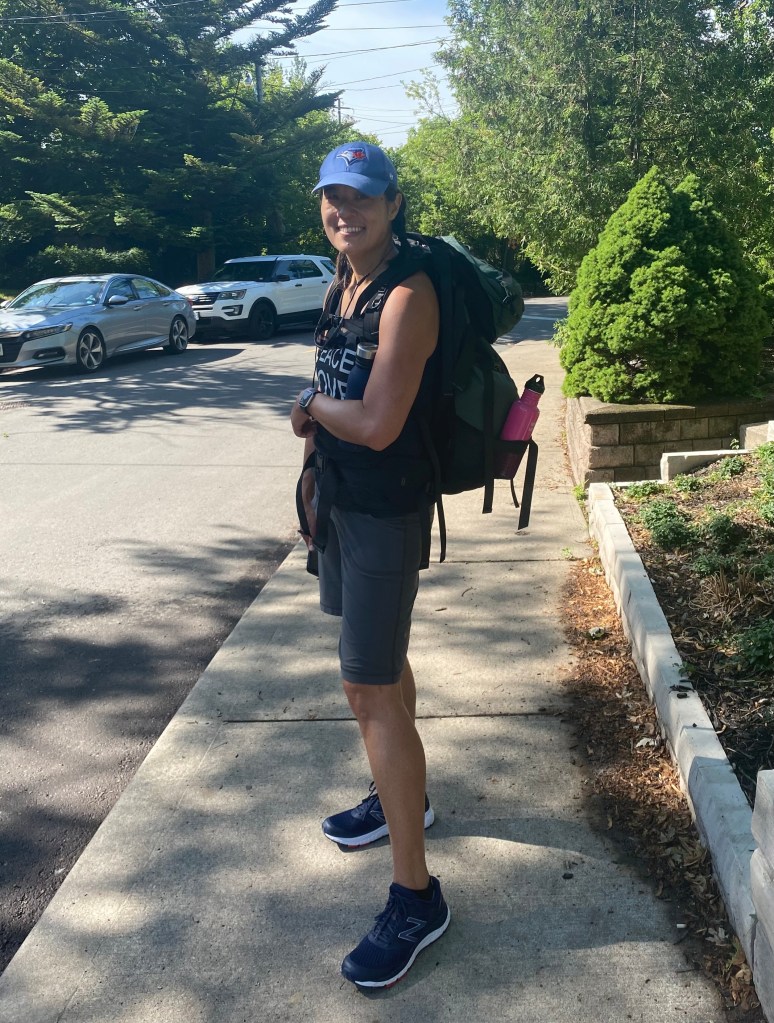
On a side note, the training for my hike is going well – in the picture above I’m carrying a large MEC pack that I’ve had for 18 years (still in good shape!). I’m up to carrying 30 lbs for 4 hours during my weekly training walks. 

[originally published July 2021]

Silver Linings Fatigue

What is silver lining fatigue?

The pandemic has been challenging for many people, in lots of different ways.

My biggest challenge has been keeping my chiropractic clinic open in downtown Toronto, one of the slowest economic centres to recover from the consequences of Covid-19.

Since I haven’t been as busy for the last 18 months, I have had more time to devote to my coaching business, which has been a silver lining.

It has allowed me to complete my systems coaching training, create a series of module-based courses and expand my client base.

It’s also a classic coaching technique to ‘reframe’ something negative into something positive – so I have been doing constant mental gymnastics since March 2020 to turn every disappointment/worry into something positive, and for the most part it has worked but I have discovered there is a limit. 

Around August I began finding it harder and harder to do the ‘reframe’ and a few weeks ago the stress peaked. I think since I am a coach, I felt a greater drive to try to constantly find the silver lining but I will admit now that it has taken a toll. 

When I shared this with my husband, who is a good listener and is slow to offer advice, he simply said to me “sometimes things are stupid and broken”. It’s a family joke that I’m often muttering ‘stupid and broken’ if I can’t get the can opener to work or something silly like that – and so hearing that from John liberated me from trying to silver-lining-the-hell out of every tough situation. 

Why am I sharing this with you? 

So that you know sometimes it’s okay to quit the mental game of finding the silver lining.
Sometimes things are just stupid and broken and we do the best we can with the pieces we are left with.

[originally published December 2021]

New Philosophy for Active Aging

Well… I survived the West Coast Trail

In the photo above my friend Caroline and I are happy to have survived the challenging boulder section on Day 2. 

75 km over 7 days – here are some more fun stats:
– I started with a 40 lbs pack including water, personal belongings and my portion of the group gear (one food bag containing 1-2 meals, fuel bottle and half a tent)no book, no cell phone 1 journal
– I expected to be blown away by the spectacular scenery (see below for two of my favourite photos from the trip) and happy to have challenged myself physically but I didn’t expect to gain a whole philosophy for aging, which came about after meeting countless people in their 50s, 60s and even 70s hike the trail!


One thing that stuck with me was learning how two independent groups of older women were approaching the trail: they each were taking 8 days, 7 nights to complete the hike whereas our group was hiking it in 7 days, 6 nights.

I think 8 days/7 nights is a wonderful metaphor for keeping active as you get older: tack on an extra day, take a bit more time, stop and smell the roses and continue to experience all the amazing things you love to do. 


[originally published August 2021]